
Leverage Technique Using Monoaxial Pedicle Screws for Thoracolumbar Compression Fractures
 Admin
Admin
Leverage Technique Using Monoaxial Pedicle Screws for Thoracolumbar Compression Fractures #SurgicalPearl
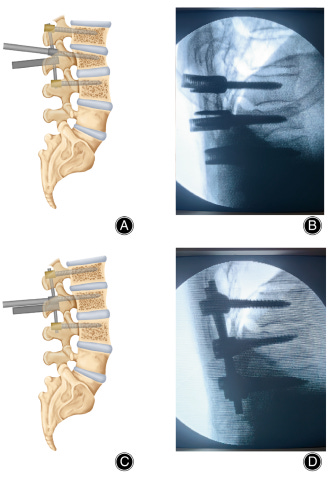
This technique by Zhu et al. enables direct vertebral body reduction by leveraging monoaxial screws, minimizing distraction-related complications such as screw loosening and implant failure. It is particularly effective for AO Type A3 fractures.
Let us provide you with the pearls:
- Posterior midline approach is used to expose the transverse and articular processes of the injured and adjacent vertebrae.
- Monoaxial screws are inserted into the fractured vertebra, parallel to its superior endplate.
- Multiaxial screws are placed in the vertebrae above and below.
- Rods are contoured to match the physiological sagittal profile.
- Rods are seated and caudal nuts are tightened to anchor the rod.
- A rod gripper is locked onto the rod, contacting the inferior edge of the monoaxial screw heads.
- As the monoaxial screw nuts are tightened, the screw tail shifts caudally and the tip elevates cranially.
- This fulcrum-based action lifts the superior endplate of the fractured vertebra.
- Reduction is confirmed when the screw and rod are perpendicular.
- Cranial nuts are then locked without applying distraction. C-arm fluoroscopy confirms reduction and hardware positioning.